What an algorithm actually does to a feed
A ranked feed doesn't show you what happened. It shows you a selection, ordered by a prediction about what will keep you scrolling. Posts from people you follow are demoted; posts from strangers are inserted; the ordering has no relationship to time.
The measurable effect is that you can't tell what you've missed. Someone you follow posted three days ago and you never saw it, not because you scrolled past, but because the ranking decided it wouldn't hold you.
Infinite scroll compounds it. A feed with no end has no natural stopping point, so the decision to stop has to come from you, against a system designed to make that decision harder.
Researchers have spent several years documenting the effects, particularly on adolescents. The American Psychological Association's health advisory on adolescent social media use is a level-headed summary if you want the evidence rather than the headlines.
What Kindred does instead
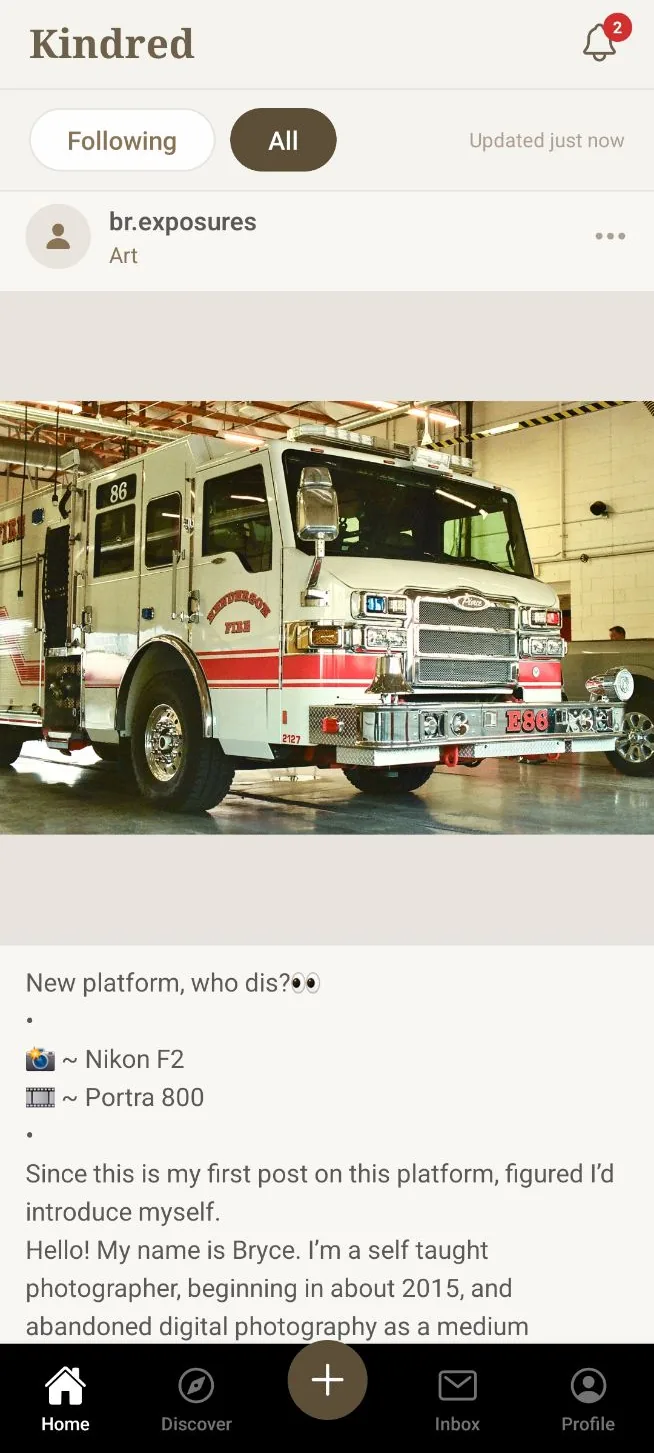
Posts appear in the order they were shared, from the accounts you followed. That's the whole rule.
Nothing is boosted. Nothing is demoted. No recommended content from strangers is inserted between the posts you asked for. There is no engagement score attached to your account deciding how many people see your next post.
The feed ends. When you reach posts you've already seen, you've caught up, which is a normal state to be in, and one that most platforms have deliberately removed.
There's also an optional daily content limit, off by default, which tracks locally on your device and doesn't report anything to us.
Why almost nobody builds this
It isn't a technical problem. Chronological feeds are simpler to build than ranked ones.
The reason is funding. If a platform's revenue comes from advertising, it earns more when people stay longer, and a ranked feed reliably produces longer sessions than a chronological one. Any ad-funded platform that switched would watch its revenue fall, so none do.
Some platforms offer a chronological option, buried in settings and often reset to the default. That tells you how they weigh it.
Kindred takes subscription revenue instead, and shares 35% of it with creators. Nobody in that arrangement earns more when you scroll longer, so there's no reason to build anything that makes you.
The honest trade-off
A ranked feed is genuinely good at one thing: putting work you'd like in front of you when you didn't know it existed. Chronological feeds are poor at that.
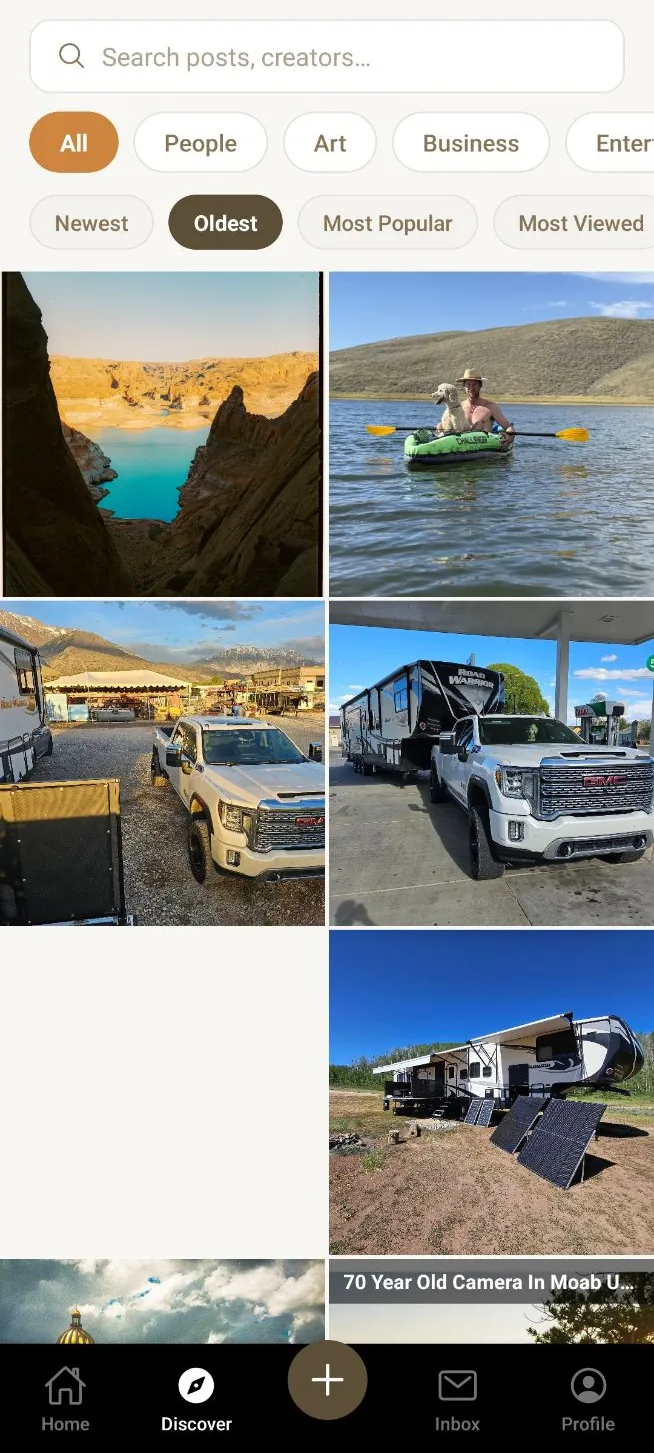
So discovery on Kindred is a separate place rather than something injected into your feed. You go and look when you want to find something new, and the feed stays what you asked for.
It also means a quiet week is a quiet feed. If the people you follow don't post, there's nothing there, which is the correct behaviour, but it's different from a platform that will always find something to show you.
And Kindred isn't free. A platform that doesn't sell attention has to be funded by the people using it. That's the trade, stated plainly.
No advertising, anywhere
There are no ads in the feed, no sponsored posts, no promoted accounts, and no advertising sold against your attention anywhere in the product.
That isn't a phase before monetisation arrives. Subscriptions are the monetisation, and adding advertising later would break the arrangement creators are paid under.
It also means less tracking. There's no advertising profile to build, because there's no advertiser to sell it to.
The straightforward version: you pay for the platform, so the platform works for you rather than for someone buying access to you.
Common questions
Is the feed really chronological?
Yes. Posts appear in the order they were shared by accounts you follow. Nothing is ranked, boosted, hidden or injected from strangers.
How do I find new people to follow?
Through a separate Discover section and creator recommendations, rather than by having unfamiliar content mixed into your feed. Discovery is a place you visit, not something done to your feed.
Is there infinite scroll?
No. The feed ends when you reach posts you've already seen. There's also an optional daily content limit that tracks locally on your device.
How is Kindred funded if there are no ads?
Subscriptions rather than advertising. Kindred is free to join, with no credit card required, and paid subscriptions fund the platform. 35% of subscription revenue, after payment processing, is shared with creators monthly.
Will you add an algorithm later?
No. The funding model is what makes a ranked feed profitable, and Kindred doesn't have that funding model. There's no revenue reason to rank the feed and a clear reason not to.
What about a free tier with ads?
There isn't one, and there won't be. An ad-supported tier would recreate every incentive this platform exists to avoid. Kindred is free to join, with no credit card required.