The problem isn't your work, it's the ranking
Ask any working photographer about Instagram and you'll hear a version of the same thing: reach collapsed, and the posts that do well aren't the ones they're proudest of. A carefully lit portrait underperforms a phone snap with a trending sound.
That's the ranking doing its job. A feed optimised for time-on-platform rewards content that holds attention in the first second, and photography, which asks you to stop and look, is a poor fit for that measure. It isn't that the work is worse. It's being judged on the wrong axis.
The consequence most photographers describe is drift. You start making what performs rather than what you want to make, in small increments, until you notice you haven't shot anything for yourself in a year.
A chronological feed removes that pressure entirely, because there's nothing to optimise for. Your photograph reaches the people who followed you whether it's your best or your quietest.
What Kindred does differently for images
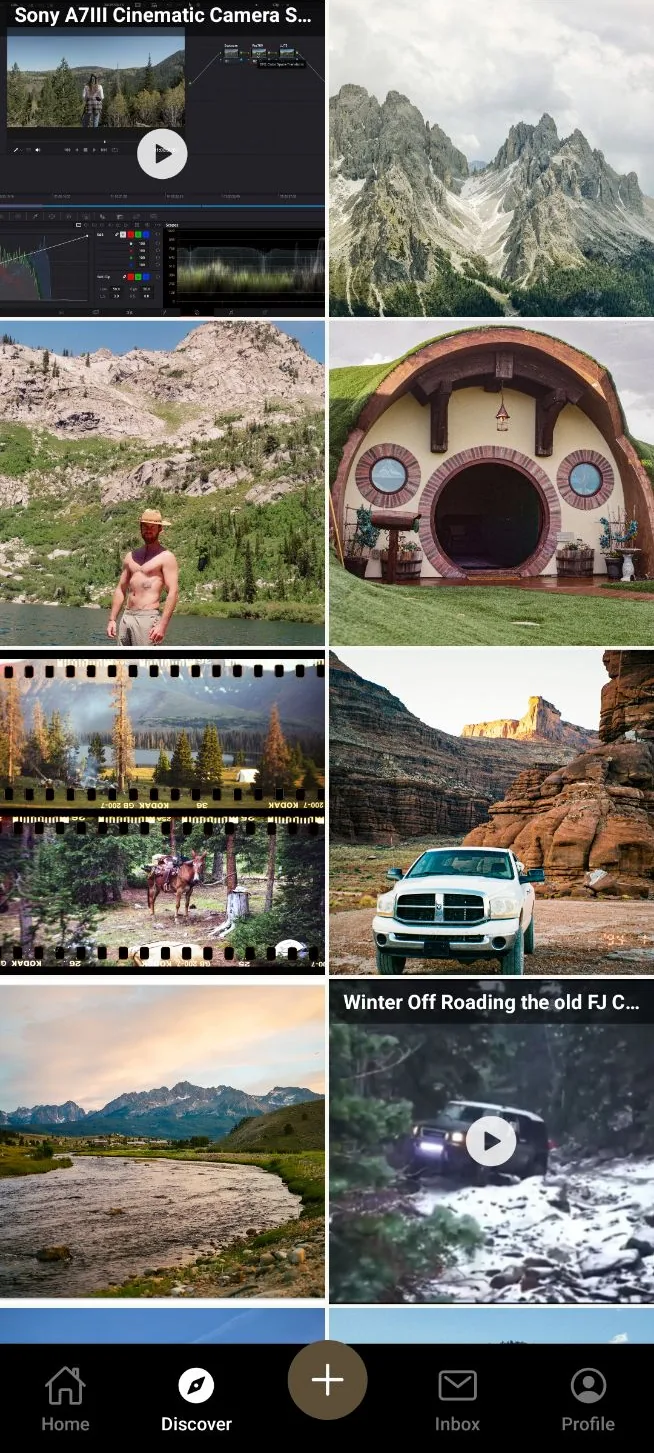
Photographs aren't cropped to fit a grid. Landscape, portrait and square all display at their own proportions, so a panoramic frame isn't cut in half to satisfy a layout.
Multi-image posts work as a proper carousel, which suits a series or a contact sheet rather than forcing you to pick one frame from a shoot.
Posts carry a category, Art, Travel, Architecture and others, so work is findable by what it is rather than only by who made it.
And there's no advertising anywhere in the feed. Your photograph isn't followed by a sponsored post for something unrelated.
Long-form video, in landscape
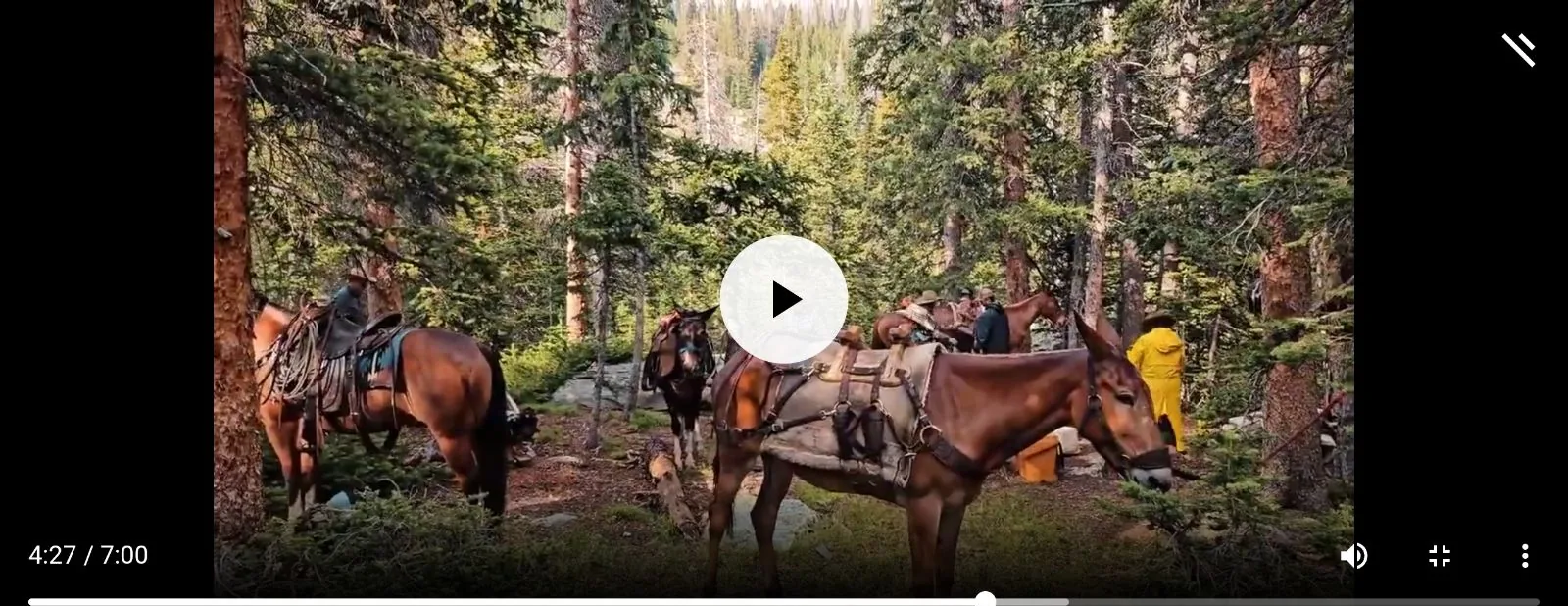
Plenty of photographers also shoot motion, and every major platform has spent five years pushing that work into vertical fragments.
Kindred's video is landscape only, running up to three hours for creators. A full edit stays a full edit. A behind-the-scenes piece doesn't need to be cut into thirty-second chunks with captions burned in.
Video is transcoded and streamed adaptively, so a large file uploaded from a camera plays properly on a phone over cellular rather than failing or buffering.
The landscape-only rule is deliberate and won't change. It's a statement about the kind of work the platform is for, and it does mean vertical-first creators are a poor fit.
Getting paid for photography
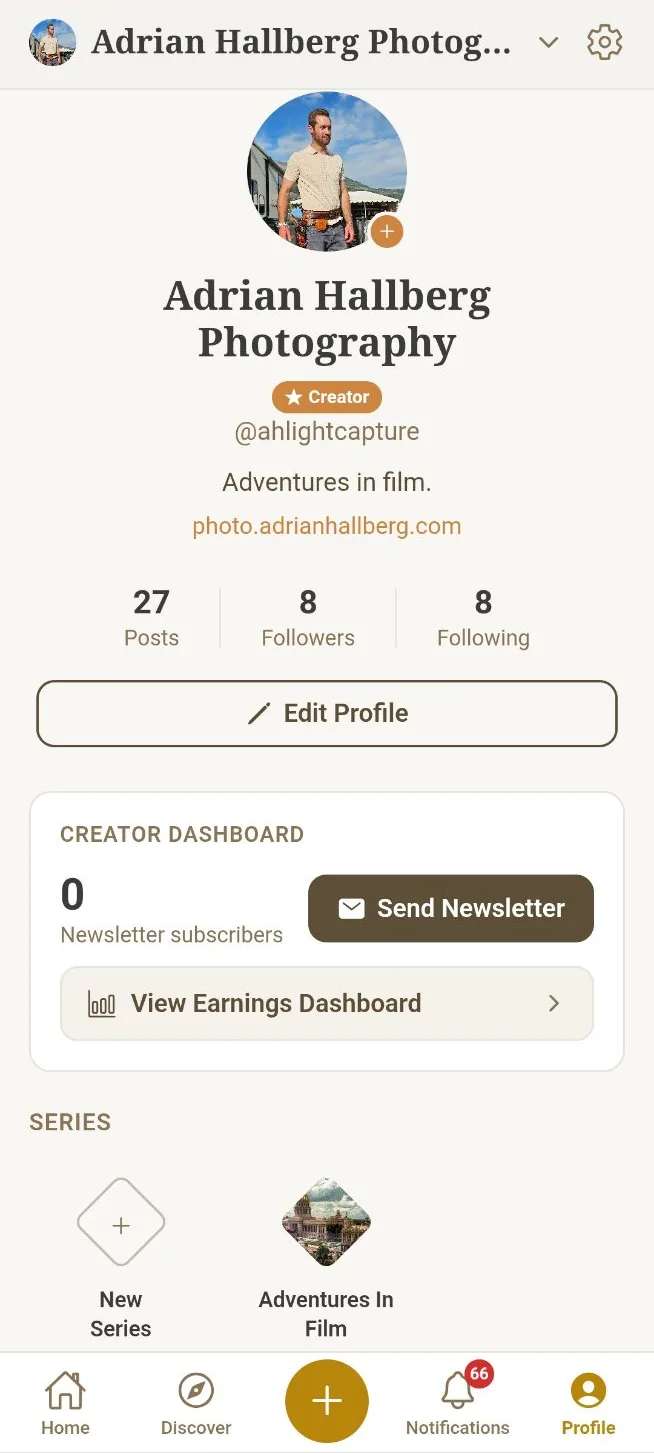
35% of subscription revenue, after payment processing, is shared among creators every month. Your share is calculated from watch time, impressions and engagement, measured against the platform total.
This matters more for photographers than for most creators, because photography is badly served by every other monetisation route. Brand deals favour lifestyle content. Ad revenue shares require volume most photographers won't produce. Print sales work but reach a fraction of an audience.
A revenue share from subscriptions pays for attention rather than for clicks or conversions, which is a closer match to what a photograph actually earns.
Earnings are calculated on the first of each month and paid via Stripe once you've accumulated ten dollars. Below that they roll over rather than disappearing.
Private collections for client and family work
Not every photograph is for the public. Wedding galleries, family sets, work in progress for a client: all of it currently lives in Dropbox links and expiring galleries.
Shared collections are private feeds inside Kindred, visible only to people you invite. The wedding party sees the wedding photographs. Nobody else does, and there's no public post to make.
It works the way the rest of the app works, so a client doesn't need to learn a separate gallery tool or download a zip file.
This is the feature most photographers find useful first, before any of the audience-building side matters.
Who Kindred isn't for
If your income depends on reach this quarter, Instagram has more people on it and will for a long time. Kindred is a small platform and says so.
If you shoot primarily vertical video for short-form platforms, the landscape-only rule makes this the wrong home.
If you want a free ad-supported tier, there isn't one. Advertising is the thing that creates every incentive this platform exists to avoid, so it isn't coming.
And if you're looking for a portfolio site with a custom domain and full design control, Kindred isn't that either: it's a feed and a community, not a website builder.
Joining as a founding creator
The first 1,000 creators join as founding creators: no follower requirement and a numbered badge.
After that, joining as a creator requires 100 followers on Kindred, rising to 500 once there are 10,000 creators, and 1,000 once there are 100,000 creators. Founding creators keep their status whatever the requirements become.
There's no application to pass and no portfolio review. If you make original work, the spot is yours.
The reason the window exists is straightforward: a platform for photographers needs photographers before it needs an audience, and the people who arrive first take the most risk.
Common questions
Does Kindred compress my photographs?
Images are processed for web delivery like any platform, but they aren't cropped to a fixed aspect ratio. Landscape, portrait and square all display at their own proportions.
Can I use Kindred for client galleries?
Yes. Shared collections are private feeds visible only to people you invite, which works for wedding parties, families or a client reviewing a shoot.
How much can a photographer earn?
It depends on the size of the subscriber base and your share of total watch time, impressions and engagement. Kindred is early, so honest answer: not much yet. The pool grows as subscribers do, which is why founding creators have a stake in the platform growing.
Do I need a following to join?
Not during the founding window. The first 1,000 creators join with no follower minimum.
Can I post video as well as photographs?
Yes, landscape video up to three hours for creators. Vertical video isn't supported.
Is there an app?
An Android app is in testing. On iPhone, Kindred runs in the browser and can be added to your home screen where it behaves like a native app. It also works on desktop.
Do I keep the rights to my photographs?
Yes. You keep ownership of everything you post. Kindred takes a licence to host and display your work, which is what any platform needs in order to show it, and nothing beyond that.