Why people leave Instagram
The complaint is rarely about the app itself. It's that reach became unpredictable. A photographer who spent three days on a shoot posts the result and it reaches a fraction of the people who deliberately followed them. The next reel, made in twenty minutes, does five times the numbers.
That isn't a malfunction. Instagram's feed is ranked to maximise time spent on the platform, because time spent is what advertisers pay for. Work that holds attention wins; work that rewards attention doesn't necessarily. Those are different things, and the gap between them is where most creators' frustration lives.
The second complaint is what the platform does to the people using it. Adolescent mental health researchers have spent the last few years documenting associations between heavy algorithmic social media use and anxiety, sleep disruption and attention difficulties. The American Psychological Association's health advisory on adolescent social media use is a reasonable starting point if you want the evidence rather than the headlines.
The third is money. Instagram monetises your audience and pays you nothing for it. Brand deals exist, but they're available to a small fraction of creators and they change what you make.
What a chronological feed actually changes
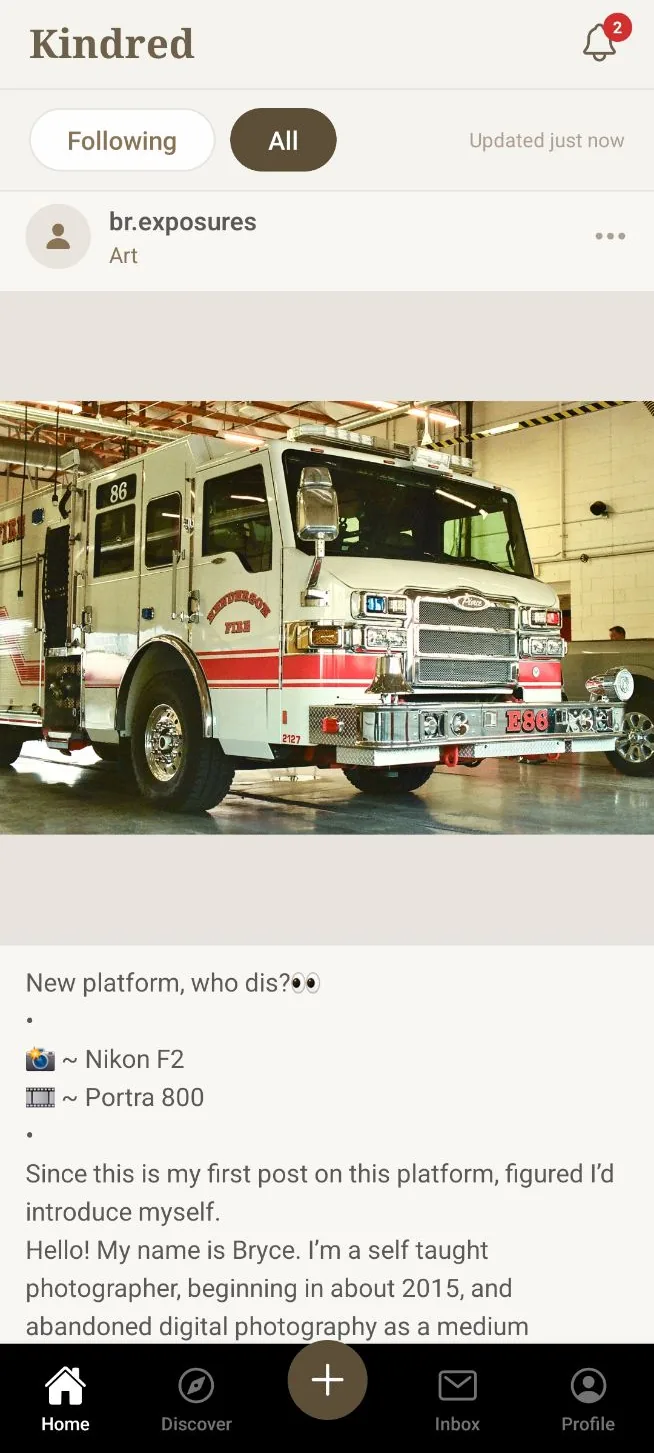
On Kindred, posts appear in the order they were shared, from the accounts you followed. Nothing is ranked, boosted, demoted or hidden. There is no recommended content from strangers mixed into your feed.
The practical effect is that posting infrequently stops being punished. On a ranked feed, a gap in posting reduces your distribution when you return, which is why so many creators describe feeling trapped on a treadmill. On a chronological feed, a post you make after three quiet weeks reaches the same people as a post you make daily.
It also changes what's worth making. Nobody needs a hook in the first second, because nothing is competing for placement. A slow landscape sequence and a fast-cut reel sit in the same feed on the same terms.
The honest cost is discovery. A ranked feed is very good at putting unknown work in front of new people, and a chronological one isn't. Kindred handles discovery through a separate Discover surface and creator recommendations rather than by ranking the feed you already chose.
How creators earn on Kindred
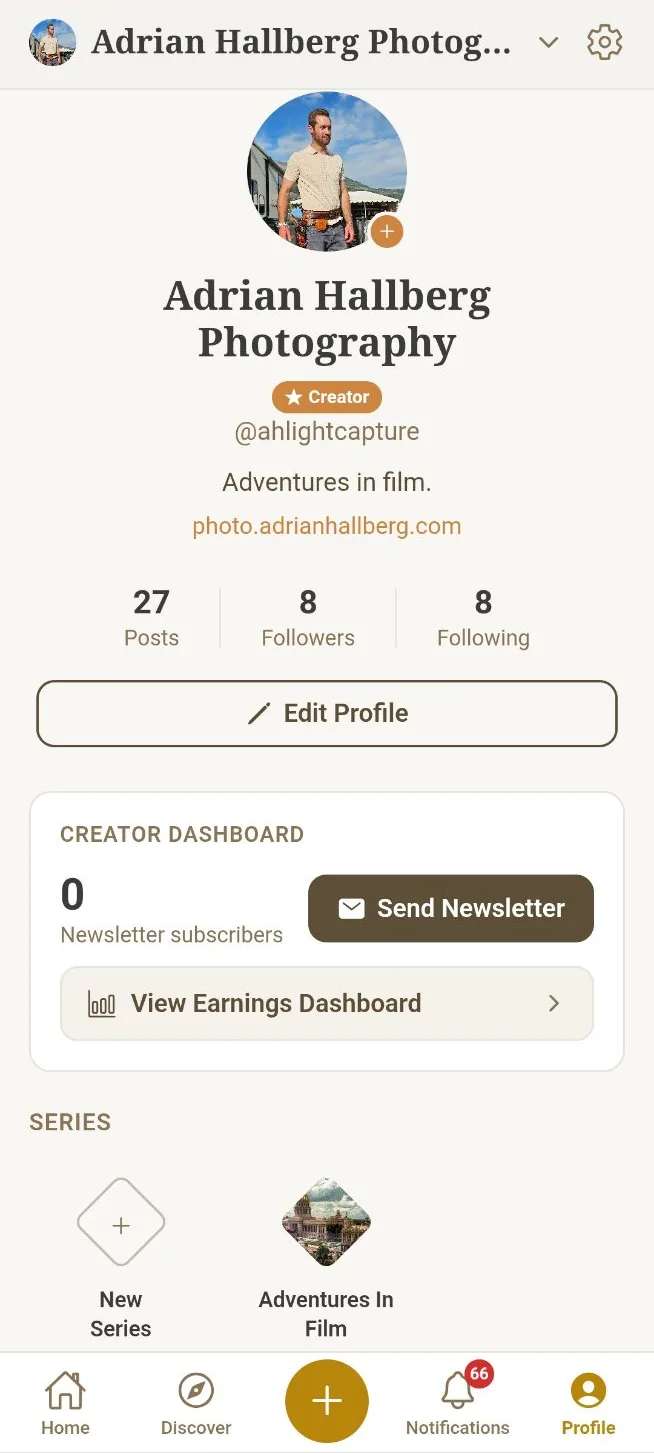
Kindred has no advertising. Subscribers pay a monthly fee, and 35% of that subscription revenue, after payment processing, goes into a pool that is shared among creators every month.
Your share is calculated from watch time, impressions and engagement, measured against the platform total. Watch time carries the most weight, because attention someone chose to give is the closest available proxy for value. Earnings are calculated on the first of each month and paid out via Stripe once you've accumulated at least ten dollars.
The important structural difference from ad-funded platforms: the money comes from people who chose to pay for the content, not from advertisers paying for their attention. That means there is no incentive anywhere in the system to keep anyone scrolling longer than they want to.
It also means earnings scale with subscribers rather than with virality. A platform with more paying members means a larger pool for everyone, which is why founding creators have a genuine stake in the thing growing.
What Kindred does that Instagram doesn't
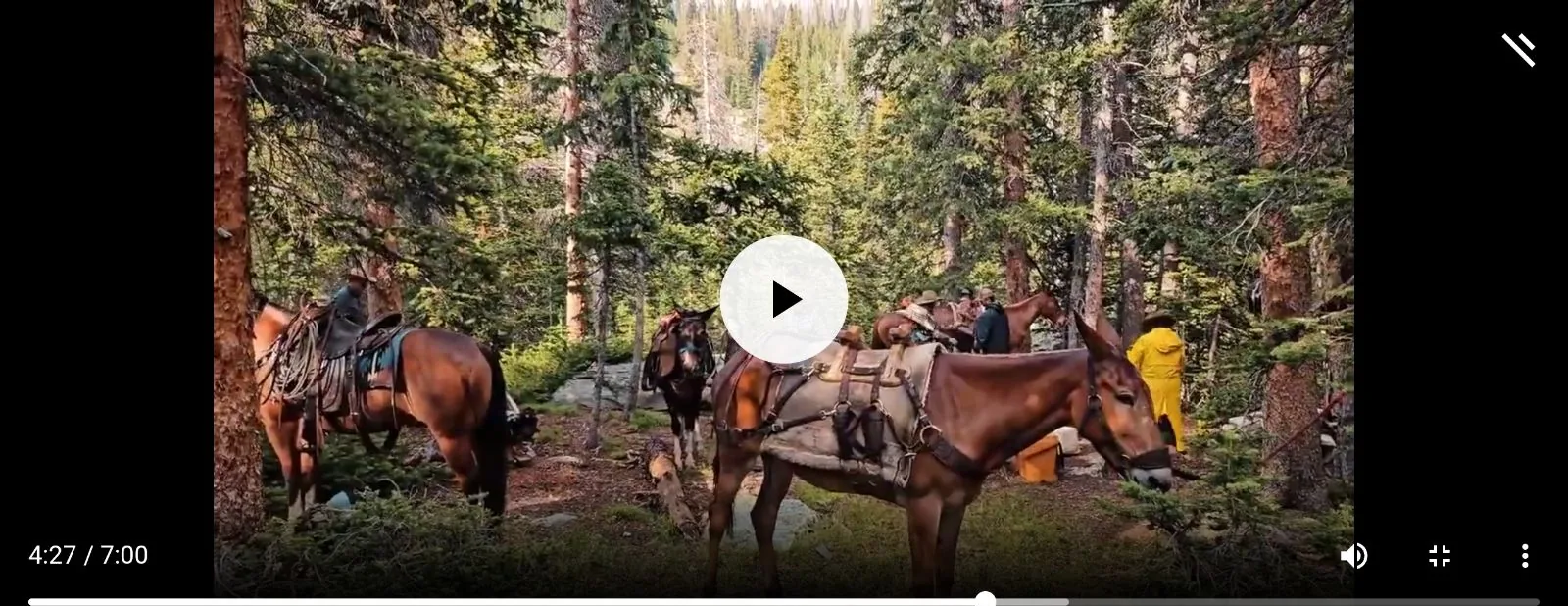
Long-form landscape video. Video posts run up to three hours for creators, in landscape, so a full edit doesn't have to be cut into vertical fragments to fit a format.
Private shared collections. You can share photos and video with a specific group, family, a wedding party, a team, in a private feed only they can see. No public posting, no strangers, no algorithm.
Family accounts with real controls. Family accounts and parental controls are free: a family group of up to six people, a daily content limit for each teen that they can't change, an instant pause, and a weekly digest of what each teen viewed. Built because most social apps offer parents nothing.
Original work only. Kindred is for things you made. Reposted content, engagement farming and AI-generated filler have no place on it, and moderation reflects that.
What Kindred doesn't do
It's a young platform. The audience is small, and if your goal this month is maximum reach, Instagram has more people on it. That will be true for a while.
There is no iPhone app in the App Store. Kindred runs in the browser on iPhone and can be added to your home screen, where it behaves like a native app. An Android app is in testing. This is a consequence of Apple's in-app purchase requirements rather than a technical limitation.
It costs money. There's no free ad-supported tier, because an ad-supported tier is the thing that creates every incentive this platform exists to avoid. Kindred is free to join, without a card.
Vertical video isn't supported. Video is landscape only, which is a deliberate choice and will not suit everyone.
Kindred compared to other Instagram alternatives
Most Instagram alternatives fall into two groups. Decentralised networks like Mastodon and Pixelfed remove the corporate owner but keep the volunteer-funded model, which means no revenue for creators and a setup process that loses most people at the first screen.
Ad-funded challengers replicate Instagram's economics under a different logo. If the revenue comes from advertising, the feed will eventually be ranked for attention, because that's what advertisers are buying.
Kindred takes the subscription route instead. Subscribers fund the platform, creators take a share, and nobody's attention is the product. The trade is that it isn't free, and that's the point rather than an oversight.
For photographers and filmmakers specifically, the practical differences are the chronological feed, three-hour landscape video, and full-resolution image handling without the crop-to-fit-the-grid problem.
Founding creators: the first thousand
The first 1,000 creators to join are founding creators. They join with no follower requirement, and get a numbered founding creator badge.
After that, joining as a creator requires 100 followers on Kindred, rising to 500 once there are 10,000 creators, and 1,000 once there are 100,000 creators. Founding creators keep their status whatever the requirements become.
The reason for the window is straightforward. A platform for creators needs creators before it needs an audience, and the people who arrive first take the most risk on something unproven. The free year is what that's worth.
There is no application to pass. If you make original work, the spot is yours.
Common questions
Is Kindred free?
Kindred is free to join, with no credit card required. There is an optional paid subscription, which funds the platform and the creator earnings pool; current pricing is shown when you subscribe.
Does Kindred have an app?
There's an Android app in testing. On iPhone, Kindred runs in the browser and can be added to your home screen, where it behaves like a native app: full screen, its own icon, no browser chrome. It also works on desktop.
How do creators get paid?
35% of subscription revenue, after payment processing, is shared among creators monthly based on watch time, impressions and engagement. Payouts run through Stripe once you've accumulated at least $10, and roll over until you reach that.
Is the feed really chronological?
Yes. Posts appear in the order they were shared by accounts you follow. Nothing is ranked, boosted, hidden or injected from strangers.
Can I post vertical video?
No. Video on Kindred is landscape only, up to three hours for creators. This is a deliberate choice about the kind of work the platform is for, not a limitation we plan to remove.
Do I need a following to join as a creator?
Not during the founding window: the first 1,000 creators join with no follower minimum. After that it is 100 followers on Kindred, and the requirement rises as the platform grows.
What happens to my Instagram audience?
Nothing automatic: there's no import. Most creators who move tell their existing audience where they've gone and bring across the people who genuinely follow their work rather than the follower count.
Is my content mine?
Yes. You keep ownership of everything you post. Kindred takes a licence to host and display it, which is what any platform needs to show your work, and nothing beyond that.