The short answer
Instagram doesn't show your post to your followers. It shows your post to a small sample of them, measures how they respond, and decides from that whether to show it to more.
If the sample engages quickly, distribution widens. If it doesn't, the post stops there. Most posts stop there.
This isn't a punishment and it isn't personal. A feed ranked for engagement has to test content on someone, and everyone's posts go through the same process. The result is that follower count and reach became separate numbers around 2016 and have drifted further apart since.
The uncomfortable implication: your follower count doesn't describe your audience. It describes the pool from which a sample is drawn.
What actually affects your reach
Early engagement speed. How quickly the test sample likes, comments and, most heavily, sends the post to someone else. Shares weigh more than likes because they signal something worth passing on.
Watch time on video. A reel watched to the end and rewatched outperforms one people scroll past at two seconds, regardless of how good the second one is.
Consistency of posting. Not because there's a penalty for gaps, but because the ranking has less recent data about how people respond to you, so it tests more cautiously.
Format, heavily. Instagram promotes whichever format it's currently pushing, reels for the last few years, and static photographs have been structurally disadvantaged throughout.
What doesn't affect it, despite what you've read
Shadowbanning, in the sense most people mean. There's no hidden list your account is on. Reach that drops without explanation is usually the ranking responding to a change in engagement, a format shift, or simply variance.
Editing a caption after posting. This one circulates endlessly and there's no evidence for it.
Using too many hashtags, or the wrong ones. Hashtags do very little for reach now either way.
Posting at the perfect time. It matters slightly for the initial sample, and far less than any of the factors above.
Why it works this way
Instagram's revenue comes from advertising. Advertising revenue scales with time spent on the platform. A feed ranked to maximise time spent produces more revenue than one showing posts in order.
That's the whole explanation. Not malice, not a conspiracy against small accounts, just the arithmetic of an ad-funded product.
It also explains why the chronological option, where it exists, is buried and often resets. A platform that earns more from ranking has little reason to make not-ranking convenient.
And it explains why this won't reverse. The incentive isn't going anywhere as long as the funding model doesn't.
What you can actually do about it
Optimise for the ranking. Post reels, post consistently, hook people in the first second, ask for shares. This works, and it changes what you make, which is why so many people who try it describe feeling worse about their own work.
Move the relationship off the platform. An email list reaches everyone who subscribed, every time, because nothing sits between you and them. Most creators who solve this solve it here.
Accept the reach you get and post for the people who see it. Genuinely a reasonable answer, and a lot of people are happier for it.
The alternative, briefly
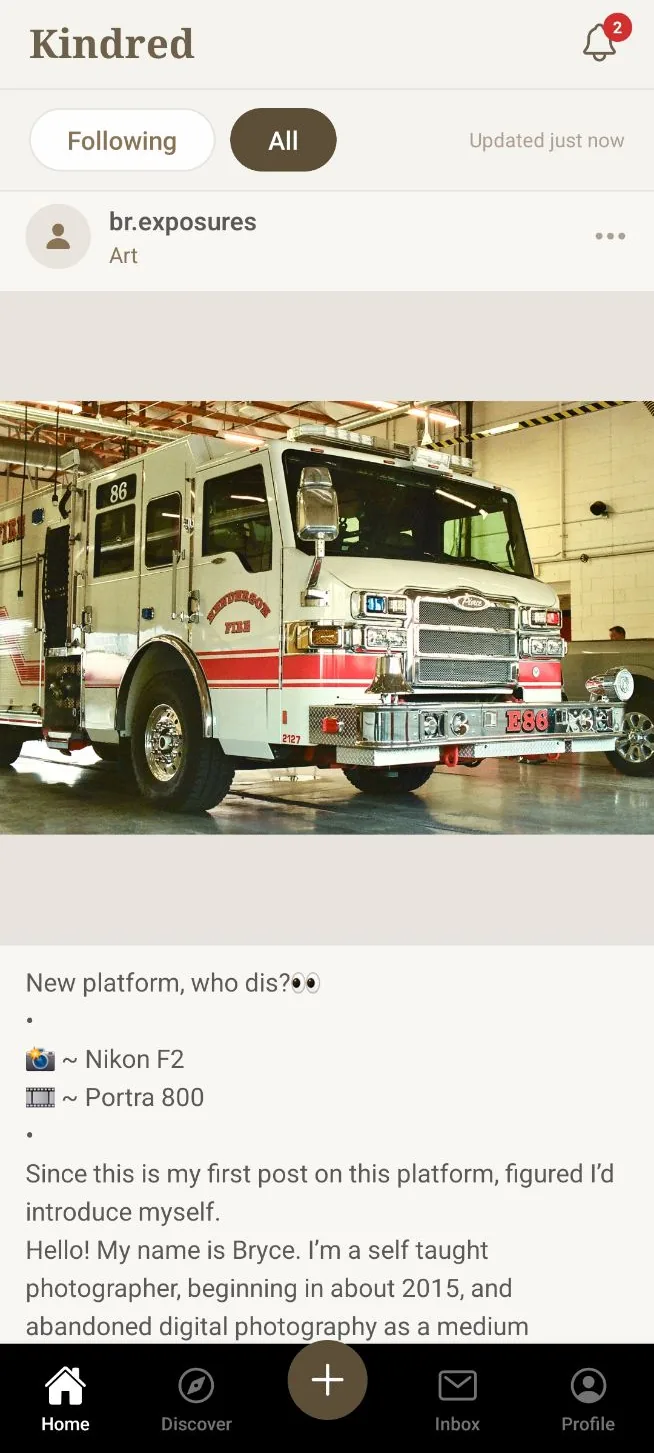
Kindred is a social platform with a chronological feed. Posts appear in the order they were shared, to the people who followed you. There's no sample, no test, no distribution decision.
It's funded by subscriptions rather than advertising, which is the part that makes an unranked feed viable: nobody earns more when you scroll longer, so there's no reason to build something that makes you.
35% of subscription revenue, after payment processing, is shared with creators monthly based on watch time, impressions and engagement.
It's a small platform and says so. If your goal this month is maximum reach, Instagram has more people on it. If your goal is that the people who chose to follow you actually see your work, that's the thing this is built for.
Common questions
What percentage of followers see my Instagram posts?
For most accounts it lands somewhere between 5% and 20% per post, varying enormously with account size, format and engagement. Larger accounts generally see a smaller percentage.
Am I shadowbanned?
Almost certainly not, in the sense usually meant. There's no hidden penalty list. Sudden reach drops are normally the ranking responding to engagement patterns, a format change, or ordinary variance.
Does deleting and reposting help?
No. You lose whatever engagement the original accumulated and start the ranking process again from zero, usually with a worse result.
Will posting more often increase my reach?
Somewhat, because the ranking has more recent data about how people respond to you. But it's a treadmill: the effect depends on continuing, and it stops when you stop.
Is there a social platform that shows posts to all my followers?
Any platform with a chronological feed does, since there's no ranking deciding distribution. Kindred is one; it's funded by subscriptions rather than advertising, which is what makes an unranked feed sustainable.